Cameron and Angel Reese: Why a Simple Calculator Still Matters for Learners
Cameron and Angel Reese are celebrated for their achievements on the basketball court, yet off the court many learners still reach for a basic calculator when tackling math homework or preparing for tests. This article looks at how a straightforward calculator can support skill‑building, what features to consider when choosing one, and practical ways to get the most out of the tool without overcomplicating the learning process.
Understanding the role of a calculator in early math practice
A calculator is not a substitute for understanding concepts; it is a check‑point that lets students verify their work and focus on problem‑solving steps. When a learner multiplies two‑digit numbers, for example, using a calculator to confirm the product helps isolate where a mistake might have occurred in the multiplication algorithm. This immediate feedback builds confidence and encourages repeated practice, which is essential for moving from procedural fluency to deeper comprehension.
For beginners, the visual layout of a basic calculator—clear digits, simple operation buttons, and an easy‑to‑read display—reduces the cognitive load associated with more complex scientific models. By keeping the interface minimal, students can concentrate on the mathematical reasoning rather than navigating menus or memorizing obscure functions.
Choosing a calculator that fits a beginner’s needs
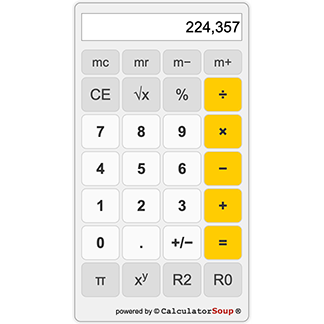
When selecting a calculator, look for a model that includes the four core functions (addition, subtraction, multiplication, division) and a percentage key, as these cover the majority of elementary and middle‑school exercises. A sturdy plastic case and a responsive keypad improve durability for daily classroom use. Some models also offer a square‑root button, which can be handy when introducing Pythagorean theorem concepts without overwhelming the user.
It is useful to test the display in different lighting conditions; a high‑contrast LCD ensures readability under fluorescent classroom lights or outdoors during study groups. Battery life is another practical consideration—calculators that run on a single AAA cell for months reduce the hassle of frequent replacements.
Practical ways to integrate the calculator into study routines
Start each practice session by solving a few problems manually, then use the calculator to verify answers. This habit reinforces mental math skills while preventing overreliance. When working on word problems, first translate the scenario into a numerical expression on paper; only after setting up the calculation should the calculator be employed to compute the result.
Group study sessions benefit from a shared calculator: one student can operate the device while others explain each step aloud. This collaborative approach highlights any gaps in understanding and encourages peer teaching. For topics like fractions, a calculator that shows decimal equivalents helps learners see the connection between different representations.
Recognizing when to move beyond the basic model
As learners progress to algebra or geometry, they may encounter functions such as exponentiation or trigonometry that a simple calculator cannot handle. At that point, upgrading to a scientific model becomes appropriate. The transition is smoother when students already understand the purpose of each button and have practiced checking their work with a reliable tool.
It is equally important to know when to set the calculator aside. For mental math drills, estimation exercises, or conceptual discussions, working without the device strengthens number sense and prepares learners for situations where a calculator is unavailable or impractical.
Final thoughts
Cameron and Angel Reese exemplify dedication and practice in their sport; the same principles apply to mastering mathematics. A modest calculator, chosen thoughtfully and used deliberately, can serve as a reliable checkpoint that supports steady progress. By pairing manual problem‑solving with occasional verification, students build both accuracy and confidence—skills that extend far beyond the classroom.