Understanding the Aruba 7205 Mobility Controller for Reliable wi vs aus live streaming
When planning a smooth wi vs aus live streaming experience, the network gear that carries the video signal often determines whether viewers see a steady picture or constant buffering.
What the Aruba 7205 Mobility Controller offers
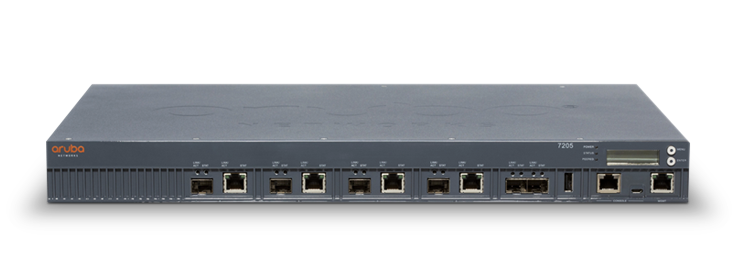
The Aruba 7205 is a compact mobility controller designed for branch and campus environments. It provides two 10GBASE‑X SFP+ uplink ports for high‑speed connections to core switches or routers, and four dual‑media ports that can operate as either copper Gigabit Ethernet or fiber links. This mix lets administrators attach a variety of access points and edge devices while reserving the SFP+ ports for bandwidth‑intensive traffic such as video streams.
How the controller supports live video workflows
Live streaming demands low latency and consistent packet delivery. By terminating wireless traffic at the controller, the 7205 can apply QoS policies that prioritize video streams over less time‑sensitive data. The dual‑media ports enable flexible uplinks—fibre for long‑distance, interference‑free runs or copper for short‑haul connections—while the 10G SFP+ links ensure the controller does not become a bottleneck when multiple high‑definition feeds are aggregated.
Practical steps to integrate the controller into a streaming setup
- Assess the total bandwidth required for all simultaneous wi vs aus live streaming feeds and confirm that the 10G uplinks can handle the sum with headroom.
- Connect the controller’s SFP+ ports to the distribution layer using appropriate fiber or twinax cables.
- Attach access points to the dual‑media ports; choose copper runs where cable lengths stay under 100 m, or use short‑reach fiber for electrically noisy areas.
- Log into the controller’s management interface and create a mobility domain that encompasses the APs serving the streaming venues.
- Apply a QoS profile that marks video packets with a high priority (e.g., DSCP EF) and verify that the profile is active on both wired and wireless interfaces.
- Run a test stream, monitor jitter and packet loss on the controller’s dashboard, and adjust queue depths or bandwidth allocations as needed.
Considerations and limits
The 7205 handles a moderate number of access points; very large venues may require a cluster of controllers or a higher‑capacity model. Firmware should be kept current to benefit from the latest video‑optimization features, and appropriate licensing is needed for advanced services like deep packet inspection or role‑based policies. Environmental factors such as temperature and power supply redundancy should also be checked, especially if the controller is placed in a closet that houses streaming encoders.
By treating the network as a purpose‑built component rather than an afterthought, organizers can reduce the risk of dropped frames and deliver a clearer wi vs aus live streaming experience to their audience.